
How to Choose Quality Automotive Connectors for Vehicle Tracker Installations
Low-quality automotive connectors are a leading cause of tracker installation failures. Learn about key types, materials, selection criteria, and best practices for secure, durable connections.
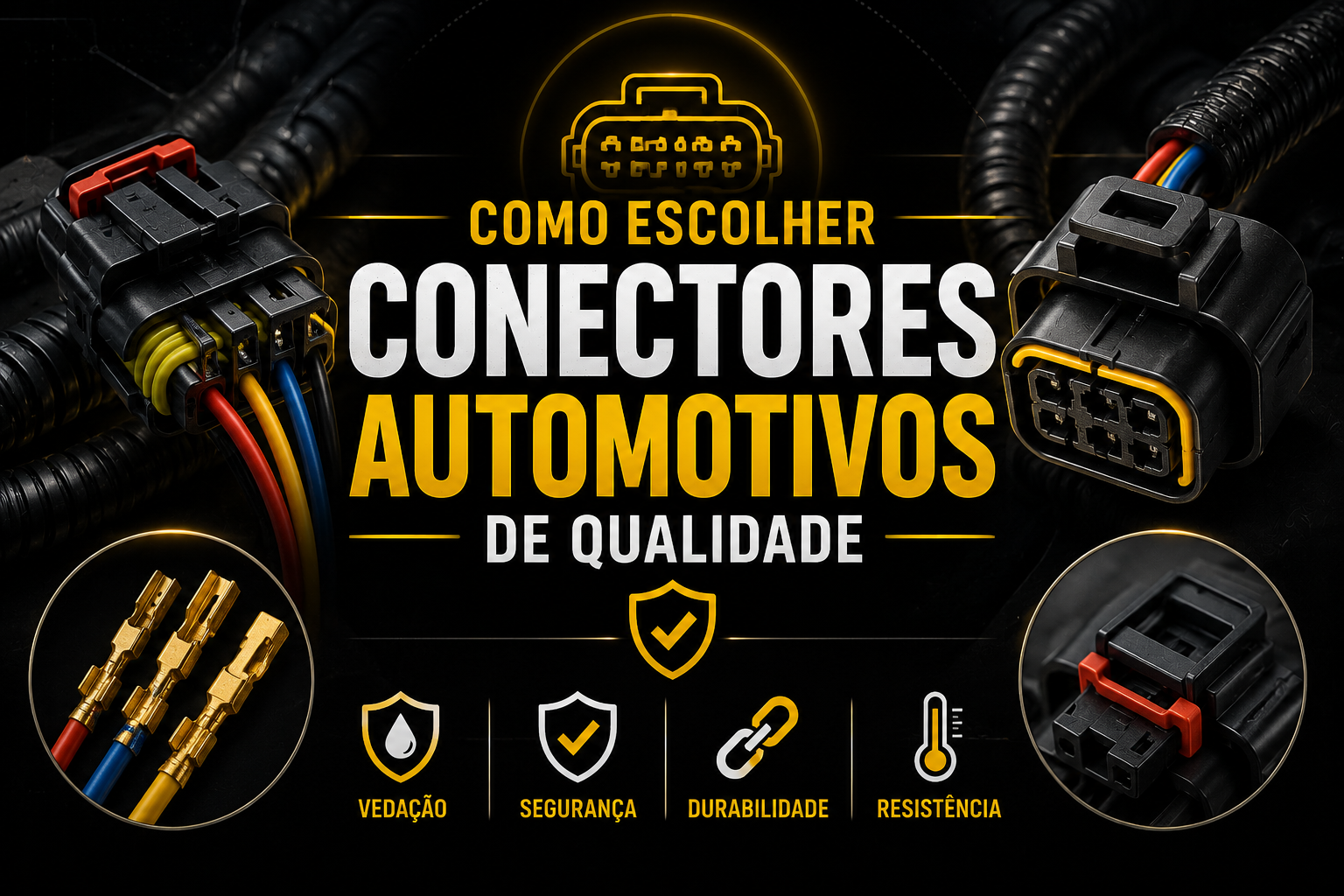
In a vehicle tracker installation, every electrical connection represents a critical point in the system. Even when using high-quality equipment, correctly sized wires, and a well-organized harness, a single poorly made connection can compromise the entire functionality of the setup.
This is precisely why automotive connectors deserve so much attention.
They are responsible for ensuring electrical continuity between components, withstanding constant vibrations, resisting humidity, temperature variations, and allowing for future maintenance when necessary.
In this article, you will understand how to choose quality automotive connectors, what characteristics to observe, and what best practices increase the reliability of a professional installation.
What are automotive connectors?
Automotive connectors are components used to join wires or interconnect electrical modules in a secure, organized, and standardized manner.
They allow circuits to be assembled and disassembled without the need to cut cables, facilitating inspections, equipment replacements, and future maintenance.
In tracker installations, they are used at various points in the system, from the electrical power supply to auxiliary modules and accessories.
Why does connector quality matter?
Contrary to what many imagine, a connector does not merely serve to join two wires.
It needs to maintain a stable electrical contact for years, even under severe operating conditions.
A low-quality connector can cause:
- increased electrical resistance;
- overheating;
- power loss;
- intermittent failures;
- contact oxidation;
- instability in the tracker's communication.
These problems usually emerge gradually, making diagnosis more difficult.
Materials used in connectors
The best automotive connectors use metal alloys developed to offer excellent electrical conductivity and corrosion resistance.
In addition to the terminal material, the connector body must also have high mechanical resistance and withstand vibrations, impacts, and temperature variations.
Low-quality materials tend to lose efficiency over time, increasing the need for maintenance.
Oxidation resistance
The automotive environment is aggressive.
Humidity, dust, chemical vapors, and thermal variations accelerate corrosion processes.
Therefore, connectors intended for the automotive sector usually receive surface treatments that increase their resistance to oxidation and preserve the quality of the electrical contact.
This characteristic is especially important in vehicles operating in coastal regions or environments with high humidity.
Sealing against water and dust
Not all installations occur in protected locations.
Depending on the application, connectors can be exposed to humidity, dust, and residues present in the automotive environment.
In these situations, models with sealing systems offer greater protection and help preserve the electrical integrity of the circuit over time.
Mechanical locking
Another important aspect is the locking system.
Quality automotive connectors use mechanisms that prevent disconnections caused by the vehicle's constant vibration.
This detail significantly reduces the risk of poor contact during operation.
Compatibility with electrical current
Each connector has current limits and its own specific use characteristics.
Before choosing, consider:
- expected current in the circuit;
- type of equipment installed;
- operating environment;
- manufacturer's recommendations.
Selecting a compatible component increases safety and reduces the possibility of failures.
Installation organization
Connectors also contribute to a more organized installation.
In addition to facilitating future technical interventions, they allow modules to be replaced without the need to cut or rework part of the harness.
This organization reduces maintenance time and improves the professional appearance of the service.
Avoid products without specifications
The market offers a wide variety of connectors.
Not all are developed for automotive applications.
Products without technical specifications may present:
- fragile metal contacts;
- low-resistance plastics;
- inadequate locking;
- low durability.
Always prioritize components designed for the automotive environment.
Best installation practices
Regardless of the type of connector chosen, some recommendations increase installation reliability:
- use appropriate tools;
- avoid mechanical stress on the wires;
- protect the harness from friction;
- organize the wiring;
- periodically inspect connections.
The quality of assembly is as important as the quality of the component.
Most common errors
Among the problems found in installations are:
- using connectors incompatible with the circuit's current;
- reusing damaged components;
- installing unsealed connectors in humid environments;
- leaving connections subjected to excessive vibration;
- using materials of unknown origin.
These practices significantly increase the maintenance rate.
Benefits of using quality connectors
Correct choice provides:
- greater electrical stability;
- lower risk of oxidation;
- ease of maintenance;
- longer installation lifespan;
- reduction of intermittent failures;
- better professional finish.
Investing in quality components represents savings over the system's life cycle.
Automotive connectors are much more than simple accessories. They play a fundamental role in the reliability, safety, and durability of vehicle tracker installations.
Choosing quality components, compatible with the application and correctly installed, significantly reduces the risk of electrical failures and increases the system's lifespan.
For companies and installers seeking excellence, investing in good connectors is a technical decision that protects equipment, reduces maintenance costs, and strengthens customer trust.
Frequently Asked Questions (FAQ)
Does every connector work for automotive installation?
No. It is important to use connectors specifically designed for automotive applications, capable of withstanding vibration, temperature, and humidity.
Does the quality of the connector affect the tracker's operation?
Yes. Low-quality connections can cause increased electrical resistance, power loss, and intermittent failures.
Is it worth using sealed connectors?
When the installation is subject to humidity, dust, or aggressive environments, sealed connectors offer greater protection and durability.
Can I reuse old connectors?
In general, it is not recommended. Worn components can exhibit contact loss, oxidation, or reduced mechanical resistance.
Does the connector influence maintenance?
Yes. Well-specified connectors facilitate future inspections, module replacements, and technical interventions.
Related articles
 Tracker Installation
How to Install a Tracker on a Motorcycle Without Voiding the Warranty? Technical Guide with Plug-and-Play Connectors
Learn how to install motorcycle trackers using plug-and-play connectors, preserving the original harness, reducing electrical interventions, and making installation safer, more professional, and reversible.
 Tracker Installation
How to Install a Vehicle Tracker While Preserving the Original Wiring Harness and Vehicle Warranty: A Comprehensive Technical Guide
Learn the best practices for installing a vehicle tracker while preserving the original wiring harness and reducing the risk of electrical problems. Discover professional techniques, tools, connectors, and precautions that help maintain vehicle integrity.
 Tracker Installation
Does Installing a Vehicle Tracker Void the Factory Warranty? A Complete Guide for Owners, Businesses, and Installers
Discover if installing a vehicle tracker can void your factory warranty. Understand how warranties work, precautions to take during installation, consumer rights, and best practices to preserve vehicle integrity.