
How to Install a Vehicle Tracker While Preserving the Original Wiring Harness and Vehicle Warranty: A Comprehensive Technical Guide
Learn the best practices for installing a vehicle tracker while preserving the original wiring harness and reducing the risk of electrical problems. Discover professional techniques, tools, connectors, and precautions that help maintain vehicle integrity.
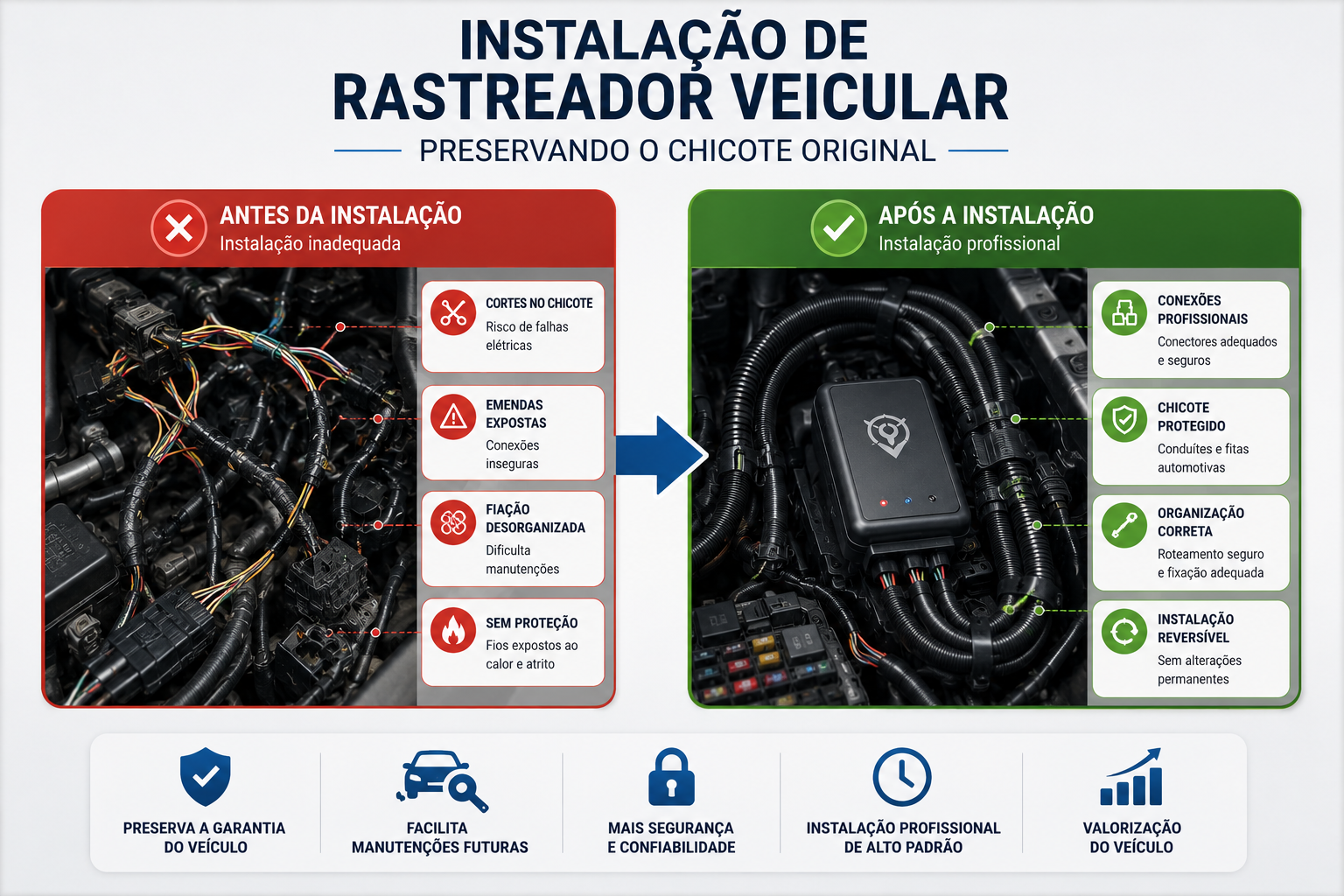
How to Install a Vehicle Tracker While Preserving the Original Wiring Harness and Vehicle Warranty
The quality of a vehicle tracker installation is as important as the quality of the equipment itself. A well-executed installation provides reliability, facilitates future maintenance, and significantly reduces the risk of electrical failures.
One of the main objectives of a professional installer should be to preserve the vehicle's original characteristics as much as possible, performing safe, organized, and, whenever possible, reversible technical interventions.
This guide brings together the main best practices used by specialized companies and experienced professionals to perform high-standard installations.
Important: The recommendations in this article are general guidelines for best practices. Each vehicle has specific electrical characteristics and should be analyzed according to the technical documentation of the manufacturer and the tracking equipment.
What does it mean to preserve the original wiring harness?
The original electrical harness is the set of wires, connectors, and protections developed by the vehicle manufacturer to power and interconnect all its systems.
Preserving it means:
avoiding unnecessary modifications; minimizing cuts and permanent interventions; using appropriate connection methods; maintaining the original wiring organization; facilitating future inspections and maintenance.
In addition to contributing to the reliability of the installation, this approach reduces the likelihood of problems arising from improper interventions.
Why avoid cutting harness wires?
Whenever there is a suitable technical alternative, preserving the original wiring is a recommended practice.
Inadequate interventions can lead to:
conductor oxidation; increased electrical resistance; poor contact; moisture infiltration; wire breakage; intermittent failures; difficulties in future maintenance.
The less intervention in the harness, the easier it tends to be to reverse and inspect the system.
Installation planning
Before starting any work, the professional must analyze the vehicle.
Points evaluated include:
electrical architecture; battery location; power points; grounding points; protected locations for module installation; safe cable routing; nearby sensitive components.
A well-planned installation reduces rework and improves the final finish.
Choosing the module installation location
The tracker must remain protected against:
excessive heat; moisture; intense vibrations; mechanical impact; interference.
It must also be discreetly installed, without compromising future vehicle maintenance.
Electrical power supply
The power supply must be performed observing:
correct voltage; fuse protection; circuit capacity; connection quality; correct identification of power points.
Using fuses close to the power point helps protect both the equipment and the electrical circuit.
The importance of grounding
Inadequate grounding can cause several operational problems.
Best practices include:
using reliable structural points; cleaning the metal surface when necessary; firm fastening; corrosion protection; checking electrical continuity. Automotive connectors
The choice of connector directly influences the quality of the installation.
Professionals usually prioritize components specific to automotive applications, capable of offering:
good fastening; low electrical resistance; mechanical protection; greater durability.
Inadequate connectors can compromise system reliability over time.
Harness organization
A professional installation stands out for its organization.
Cables should:
follow the original harness whenever possible; remain protected by conduits when necessary; be adequately secured; maintain distance from moving parts; avoid contact with heat sources.
In addition to the visual aspect, this organization facilitates future technical interventions.
Wiring protection
To increase the durability of the installation, specific materials can be used to protect cables, such as:
corrugated conduits; heat shrink tubing; appropriate automotive tapes; cable ties suitable for the automotive environment.
The choice depends on the characteristics of the installation and the equipment manufacturer's recommendations.
Installation in hybrid and electric vehicles
These vehicles require additional care due to the presence of more complex electrical systems.
It is recommended to:
strictly follow the manufacturer's procedures; avoid any intervention in high-voltage circuits; use compatible equipment; rely on professionals trained for this type of application. Installation documentation
A professional installation should be documented.
This may include:
service photographs; equipment identification; record of tests performed; technical report; tracker serial number.
These records facilitate future maintenance and add value to the service provided.
Tests before delivery
Before releasing the vehicle, it is recommended to check:
tracker operation; platform communication; electrical power supply; ignition operation; GPS location; event transmission; equipment fastening; cable organization. Errors to avoid
Some practices significantly increase the risk of failures and should be avoided:
leaving wires exposed; making improvised connections; installing the module near intense heat sources; securing cables next to moving components; using materials not intended for the automotive environment; leaving cables under mechanical tension; neglecting the electrical protection of the circuit. Premium Installation Checklist
Before concluding the service, confirm:
✔ Planning completed.
✔ Compatible equipment.
✔ Protected power supply.
✔ Grounding checked.
✔ Cables organized.
✔ Wiring protection installed.
✔ Module correctly fastened.
✔ Communication tested.
✔ Platform functioning.
✔ Installation documented.
✔ Vehicle cleaned for delivery.
Benefits of a professional installation
An installation executed with good practices provides:
greater system reliability; reduction of electrical failures; ease of maintenance; best finish; greater durability of components; more safety for the owner and the installing company. Conclusion
Excellence in vehicle tracker installation goes far beyond connecting a few wires. It involves planning, technical knowledge, appropriate material selection, and respect for the vehicle's original characteristics.
By preserving the original wiring harness, correctly organizing the wiring, and following industry-recognized procedures, the installer delivers a safer, more durable, and professional service. These precautions reduce risks, facilitate future maintenance, and reinforce customer confidence in the quality of the work performed.
Frequently Asked Questions (FAQ)
Is it always possible to install a tracker without altering the original wiring harness?
It depends on the vehicle and the equipment used. In many cases, it is possible to significantly minimize interventions using best practices and appropriate components.
Why is cable organization important?
In addition to the finish, it reduces the risk of mechanical damage, facilitates future maintenance, and contributes to the durability of the installation.
Does grounding influence tracker operation?
Yes. Inadequate grounding can compromise equipment performance and stability.
Do hybrid vehicles require different care?
Yes. These vehicles have a more complex electrical architecture and require specific procedures.
Is it worth documenting the installation?
Yes. Photos, tests, and technical reports add value to the service and facilitate future inspections.
Related articles
 Tracker Installation
How to Install a Tracker on a Motorcycle Without Voiding the Warranty? Technical Guide with Plug-and-Play Connectors
Learn how to install motorcycle trackers using plug-and-play connectors, preserving the original harness, reducing electrical interventions, and making installation safer, more professional, and reversible.
 Tracker Installation
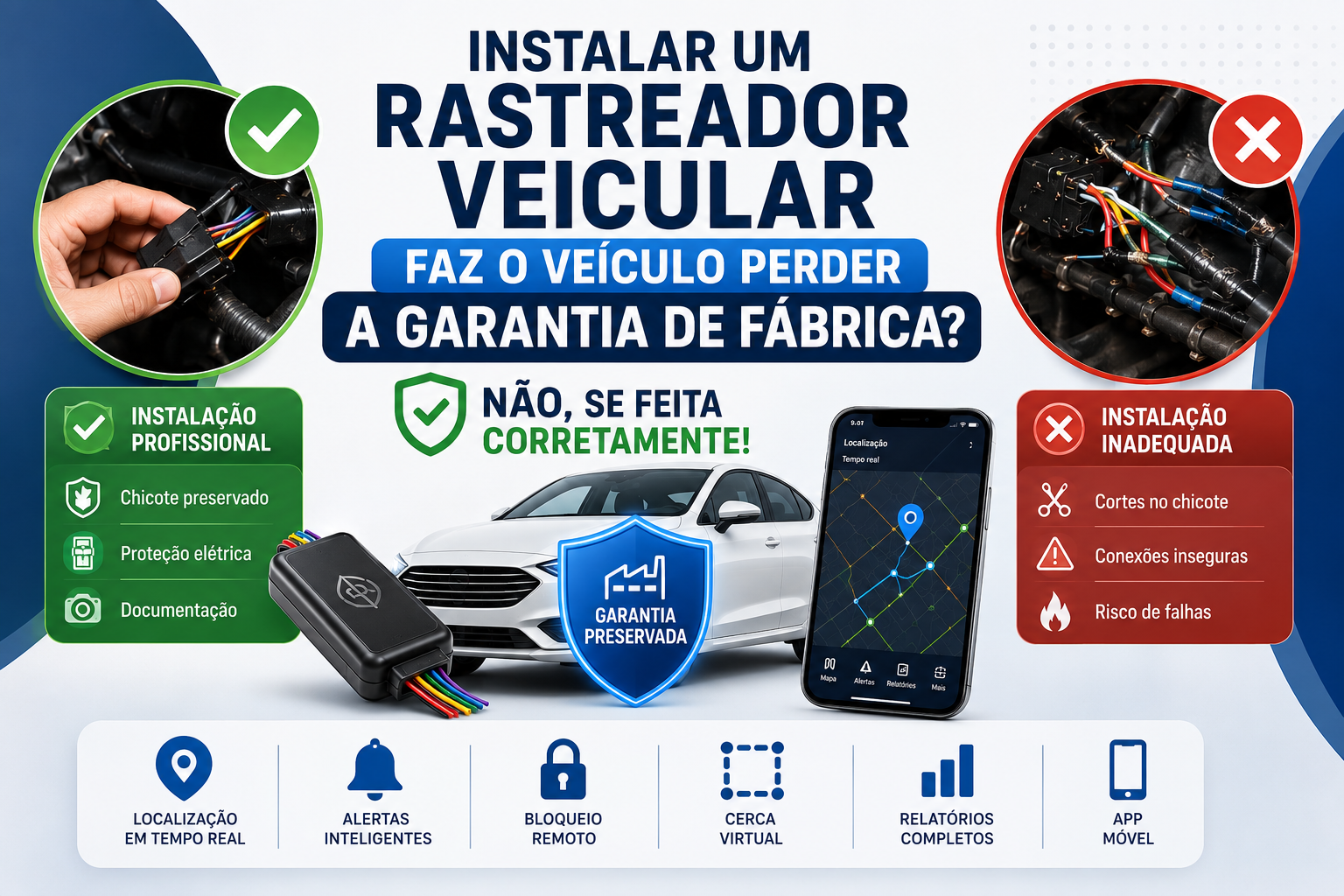
Does Installing a Vehicle Tracker Void the Factory Warranty? A Complete Guide for Owners, Businesses, and Installers
Discover if installing a vehicle tracker can void your factory warranty. Understand how warranties work, precautions to take during installation, consumer rights, and best practices to preserve vehicle integrity.
 Tracker Installation
How to Diagnose Vehicle Tracker Failures: A Complete Guide for Installers
Learn how to diagnose the main failures in vehicle trackers. Discover a complete step-by-step guide to identify problems with power, GPS, GSM, wiring harness, antennas, relays, blocking, and platform communication.