
How to Perform a Safe Car Kill Switch Installation: Best Practices for Vehicle Tracker Systems
A car kill switch is one of the most important features of vehicle trackers. Learn best practices for a safe, reliable, and professional installation, reducing risks and preserving the vehicle's electrical integrity.
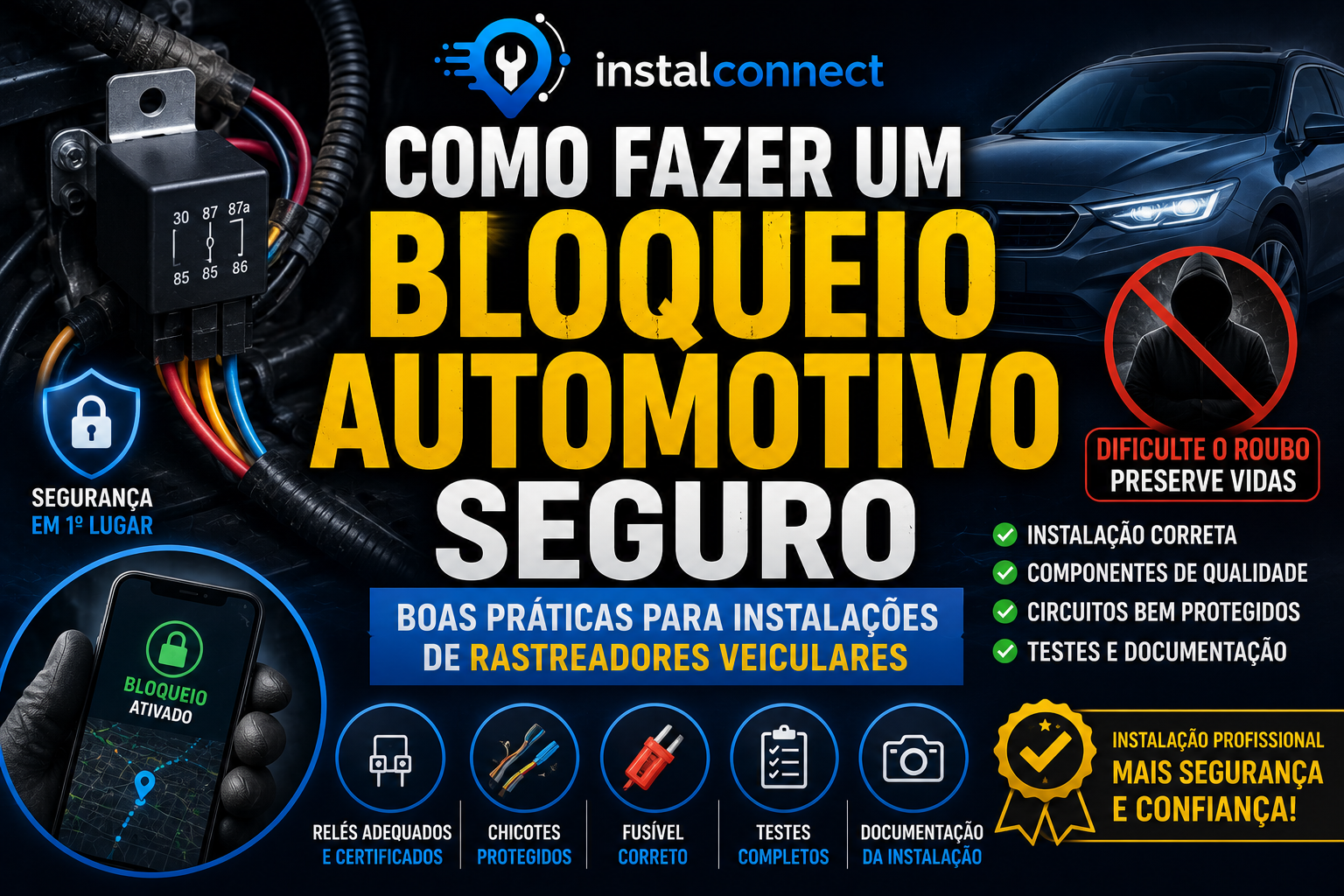
The remote kill switch is one of the most valued features in a vehicle tracking system. When correctly installed, it allows the vehicle's operation to be interrupted in a controlled manner, aiding recovery in cases of theft or robbery.
However, this functionality requires technical responsibility. A kill switch installed improperly can lead to mechanical failures, damage to the electrical system, unexpected breakdowns, and risks to driver safety.
In this article, you will learn the main best practices for performing a safe, reliable, and compatible automotive kill switch installation for different types of vehicles.
What is a car kill switch?
A car kill switch involves the controlled interruption of a circuit essential for vehicle operation, via a command sent by the tracking system.
Depending on the technology used and the vehicle's characteristics, this kill switch can act on different circuits, always following the recommendations of the tracker and vehicle manufacturers.
Its main objective is to hinder the continued use of the vehicle after a theft or robbery event, preserving the integrity of the installation.
Safety must be a priority
The kill switch should never endanger the safety of the driver, passengers, or third parties.
For this reason, many modern systems only activate the kill switch when certain conditions are met, such as reduced speed or the vehicle being stationary.
Regardless of the technology employed, the installation must strictly follow the equipment manufacturer's guidelines.
Understand the circuit before installation
Each vehicle has its own characteristics.
Before installing any kill switch system, it is essential to:
- consult the electrical diagram;
- understand the operation of the chosen circuit;
- check for possible electronic interferences;
- confirm compatibility with the tracker.
Improvisations significantly increase the risk of failures.
Use quality components
The entire kill switch system depends on the quality of the components used.
Always prefer:
- certified automotive relays;
- appropriate connectors;
- quality terminals;
- protected harnesses;
- correctly sized fuses.
Low-quality parts reduce the reliability of the installation.
Protect all connections
Poorly executed splices are among the main causes of maintenance issues.
Whenever possible:
- use suitable connectors;
- protect connections with heat shrink;
- organize the harness;
- avoid points susceptible to moisture.
In addition to reliability, this facilitates future interventions.
Avoid interfering with critical systems
Modern vehicles have dozens of interconnected electronic modules.
Any inadequate intervention can generate:
- error messages;
- irregular operation;
- loss of communication between modules;
- need for reprogramming.
Before any installation, carefully study the involved circuit.
Attention to hybrid and electric vehicles
Electrified vehicles require additional care.
Although many trackers only use the 12V auxiliary network, these vehicles have very complex electronic architectures.
Never intervene in high-voltage systems without specific training.
Relay positioning
The relay should be installed in a location protected from:
- moisture;
- excessive heat;
- vibration;
- mechanical impacts.
It is also important to facilitate future inspections and maintenance.
Organize the harness
The kill switch system must follow the same quality standard used throughout the installation.
Maintain:
- protected harnesses;
- corrugated conduits;
- correctly positioned clamps;
- cable identification.
An organized installation reduces rework and improves finish.
Test the system before delivery
Never return a vehicle without performing all tests.
Check:
- normal vehicle operation;
- kill switch activation;
- correct circuit restoration;
- absence of dashboard faults;
- communication with the platform.
Time invested in testing avoids unnecessary returns.
Document the installation
Record:
- relay location;
- harness routing;
- connection points;
- installation photos;
- tracker model;
- installation date.
This information facilitates future maintenance.
Most common mistakes
Among the problems found in installations are:
- undersized relays;
- low-quality connectors;
- unprotected harnesses;
- absence of fuse;
- lack of testing;
- improvised installations;
- non-existent documentation.
Checklist for a safe kill switch
Before completing the installation, confirm:
✔ The circuit was correctly identified.
✔ The relay has adequate specifications.
✔ Connections are protected.
✔ The harness is organized.
✔ The system has been fully tested.
✔ There are no error messages.
✔ Documentation has been completed.
✔ The client received guidance on the kill switch's operation.
Benefits of a professional installation
Following best practices provides:
- greater reliability;
- lower maintenance rates;
- greater operational safety;
- preservation of original electrical system;
- better finish;
- greater customer satisfaction.
Conclusion
The car kill switch is one of the most important functionalities of a tracking system, but its efficiency depends directly on the quality of the installation. Knowing the vehicle, using appropriate components, protecting connections, and performing comprehensive tests are practices that ensure a reliable and safe system.
By adopting standardized procedures and documenting each installation, professionals reduce rework, increase service durability, and strengthen their reputation in the market. In a scenario where automotive technology evolves rapidly, technical excellence is a competitive differentiator.
Frequently Asked Questions (FAQ)
Does every tracker have a kill switch function?
No. Some models offer only tracking and telematics, while others include the remote kill switch function.
Can I install the kill switch the same way in any vehicle?
No. Each vehicle has its own electrical architecture. It is essential to consult the technical documentation and follow the tracker manufacturer's guidelines.
Does the relay influence the reliability of the kill switch?
Yes. Using a quality and correctly specified relay is fundamental to ensure the system's operation.
Is it mandatory to test the kill switch before delivery?
Yes. All commands and the vehicle's behavior must be verified before handing it over to the client.
Is installation documentation really important?
Yes. Photos, identification of used points, and technical records facilitate future maintenance and help maintain a professional standard.
Related articles
 Tracker Installation
How to Install a Tracker on a Motorcycle Without Voiding the Warranty? Technical Guide with Plug-and-Play Connectors
Learn how to install motorcycle trackers using plug-and-play connectors, preserving the original harness, reducing electrical interventions, and making installation safer, more professional, and reversible.
 Tracker Installation
How to Install a Vehicle Tracker While Preserving the Original Wiring Harness and Vehicle Warranty: A Comprehensive Technical Guide
Learn the best practices for installing a vehicle tracker while preserving the original wiring harness and reducing the risk of electrical problems. Discover professional techniques, tools, connectors, and precautions that help maintain vehicle integrity.
 Tracker Installation
Does Installing a Vehicle Tracker Void the Factory Warranty? A Complete Guide for Owners, Businesses, and Installers
Discover if installing a vehicle tracker can void your factory warranty. Understand how warranties work, precautions to take during installation, consumer rights, and best practices to preserve vehicle integrity.