
How to Choose the Correct Wire Gauge for Vehicle Tracker Installations
The choice of wire gauge directly influences the safety, reliability, and durability of a tracker installation. Learn the technical criteria for selecting the appropriate conductor and avoiding overheating, voltage drop, and electrical failures.
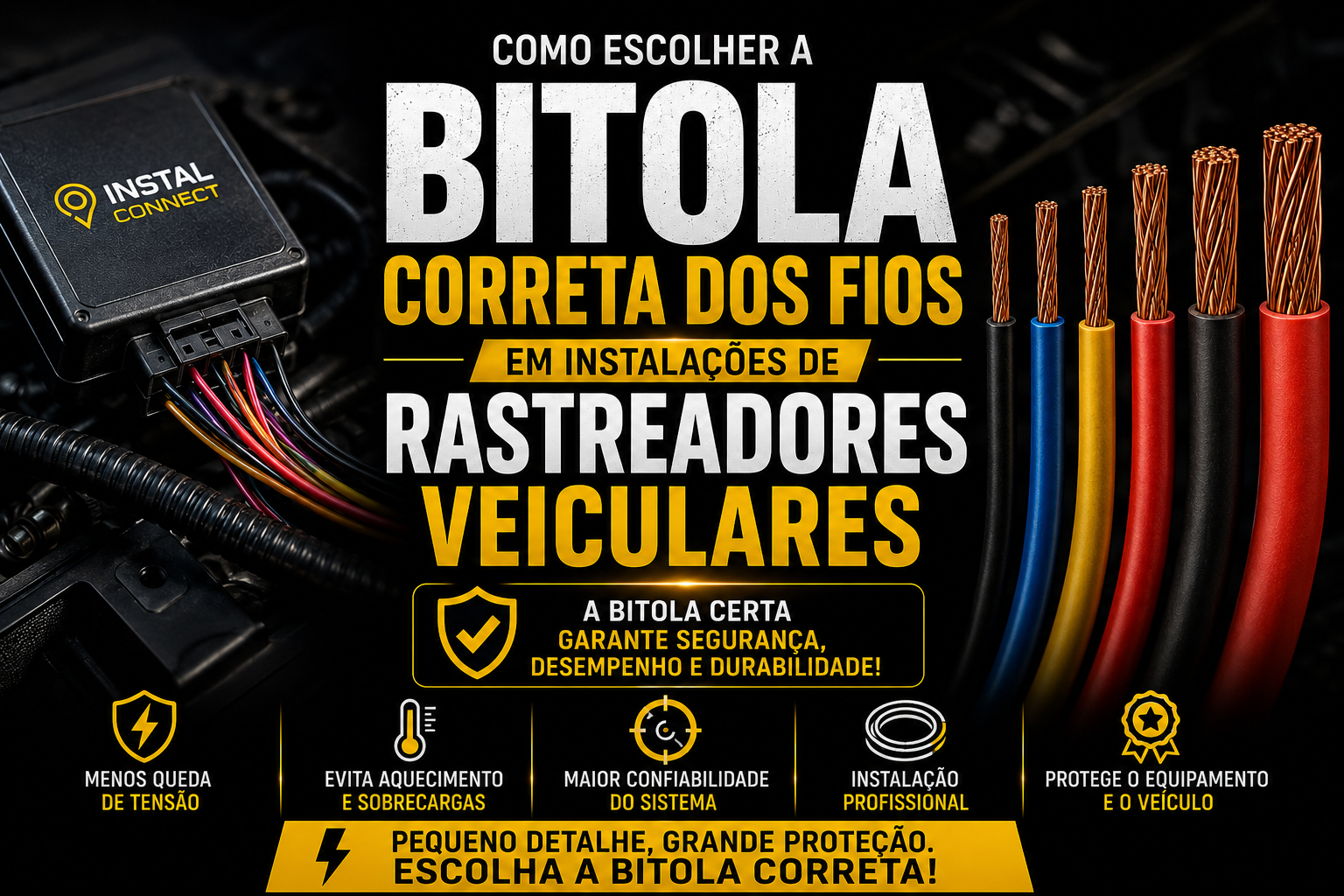
When a tracker exhibits electrical faults, many professionals assume the problem lies with the equipment, the M2M chip, or the monitoring platform.
However, one of the most common causes is the incorrect choice of wire gauge used during installation.
An inadequate conductor can cause overheating, voltage drop, unstable operation, and reduced component lifespan.
In this article, you will understand how to correctly choose the wire gauge for vehicle tracker installations and why this detail makes all the difference in service quality.
What is Wire Gauge?
Gauge represents the cross-sectional area of the electrical conductor, typically expressed in square millimeters (mm²).
The larger the gauge, the greater the wire's capacity to safely conduct electrical current.
This characteristic directly influences the performance and reliability of the installation.
Why is Wire Gauge Important?
Choosing the correct gauge allows electrical current to flow without causing excessive heating or significant losses.
When the conductor is inadequate for the application, the following can occur:
- Overheating of cables;
- Voltage drop;
- Unstable tracker operation;
- Premature insulation wear;
- Reduced component lifespan.
Furthermore, incorrect sizing can compromise the fuse's performance and increase maintenance costs.
Factors Influencing the Choice
Wire gauge selection does not depend solely on electrical current.
Other factors must also be considered:
- Harness length;
- Ambient temperature;
- Installation method;
- Cable grouping;
- Copper quality;
- Insulation type.
All these elements influence the conductor's capacity.
Electrical Current
The first aspect analyzed is the current anticipated for the circuit.
The higher the current, the greater the need for a conductor with higher carrying capacity.
Always consider the consumption of all components connected to the same circuit.
Harness Length
Cable length also influences the installation.
Longer conductors have higher electrical resistance, increasing the possibility of voltage drop.
In trucks, buses, and agricultural machinery, this factor deserves special attention due to the greater distances covered by the harnesses.
Voltage Drop
Voltage drop naturally occurs when current flows through a conductor.
In well-designed installations, this loss remains within acceptable limits.
Insufficient gauges increase this drop and can compromise the operation of the tracker and auxiliary modules.
Pure Copper Makes a Difference
Not all wires have the same quality.
The best conductors use high-purity copper.
Its advantages include:
- Lower electrical resistance;
- Greater flexibility;
- Less heating;
- Greater durability.
Wires made with lower quality materials perform worse, especially in environments subject to vibration and high temperatures.
CCA vs. Pure Copper
A common mistake is to use wires made with CCA (Copper Clad Aluminum).
Although cheaper, these conductors have an aluminum core coated with copper.
In practice, they often offer:
- Higher electrical resistance;
- Less flexibility;
- Lower mechanical resistance;
- Greater heating under load.
For professional installations, pure copper remains the best choice.
Insulation Matters Too
In addition to the conductor, the outer coating directly influences the durability of the installation.
Insulation must resist:
- High temperatures;
- Abrasion;
- Humidity;
- Vibration;
- Contact with oils and fuels.
Certified automotive materials offer a longer lifespan.
Organization Reduces Problems
Even with the correct gauge, a poorly organized installation can lead to failures.
Good practices include:
- Protecting wires with conduits;
- Avoiding contact with moving parts;
- Keeping cables away from intense heat sources;
- Properly securing the harness.
These precautions significantly reduce mechanical wear.
Fuse and Gauge Work Together
The fuse protects the circuit, while the gauge determines the conductor's carrying capacity.
These two elements must be compatible.
Correctly sizing only one of them does not guarantee a safe installation.
Therefore, always consider the circuit as a whole.
Most Common Errors
Among the problems found in installations are:
- Using thinner wires to reduce costs;
- Mixing conductors of different qualities;
- Reusing old cables;
- Ignoring harness length;
- Using inadequate insulation.
These practices increase maintenance rates and reduce system reliability.
Benefits of Correct Sizing
Choosing the appropriate gauge provides:
-
Greater electrical stability;
-
Less heating;
-
Lower voltage drop;
-
Longer component lifespan;
-
Reduced failures;
-
Lower warranty claims.
It is a small investment that brings great returns in reliability.
Conclusion
Choosing the correct wire gauge is one of the most important steps in a professional vehicle tracker installation.
More than simply connecting the equipment, the installer must understand how electrical current, harness length, conductor quality, and insulation influence system performance.
By using good quality copper wires, selecting the appropriate gauge for the application, and correctly organizing the harness, it is possible to increase installation durability, reduce maintenance costs, and offer a high-standard service to the client.
Frequently Asked Questions (FAQ)
What is wire gauge?
It is the cross-sectional area of the conductor, typically expressed in square millimeters (mm²), which influences its capacity to carry electrical current.
Can I use any wire on a tracker?
No. The conductor must be compatible with the circuit current, harness length, and automotive environment conditions.
What is the difference between pure copper and CCA?
Pure copper offers better conductivity, greater flexibility, and longer durability. CCA uses aluminum coated with copper and tends to offer inferior performance in automotive applications.
Does cable length matter?
Yes. The longer the length, the greater the voltage drop tends to be, making sizing even more important.
Does the gauge affect the tracker's lifespan?
Indirectly, yes. A correctly sized installation reduces heating, electrical instability, and stress on electronic components.
Related articles
 Tracker Installation
How to Install a Tracker on a Motorcycle Without Voiding the Warranty? Technical Guide with Plug-and-Play Connectors
Learn how to install motorcycle trackers using plug-and-play connectors, preserving the original harness, reducing electrical interventions, and making installation safer, more professional, and reversible.
 Tracker Installation
How to Install a Vehicle Tracker While Preserving the Original Wiring Harness and Vehicle Warranty: A Comprehensive Technical Guide
Learn the best practices for installing a vehicle tracker while preserving the original wiring harness and reducing the risk of electrical problems. Discover professional techniques, tools, connectors, and precautions that help maintain vehicle integrity.
 Tracker Installation
Does Installing a Vehicle Tracker Void the Factory Warranty? A Complete Guide for Owners, Businesses, and Installers
Discover if installing a vehicle tracker can void your factory warranty. Understand how warranties work, precautions to take during installation, consumer rights, and best practices to preserve vehicle integrity.